Teaching
Teaching Materials & Philosophy
I am committed to creating course materials that integrate analytical rigor with real-world decision-making in energy, infrastructure, and industrial systems. My courses emphasize reproducible workflows, practical implementation using modern analytics tools, and thoughtful interpretation of results for managerial and engineering action.
I strive to make course content clear, structured, and accessible, and I welcome feedback and suggestions to continually improve the learning experience.
Courses
IDIS 450 Analytics for Distribution Operation
Semesters Taught:
- Fall 2024
- Fall 2026
- Spring 2025
- Fall 2024
- Spring 2024
- Fall 2023
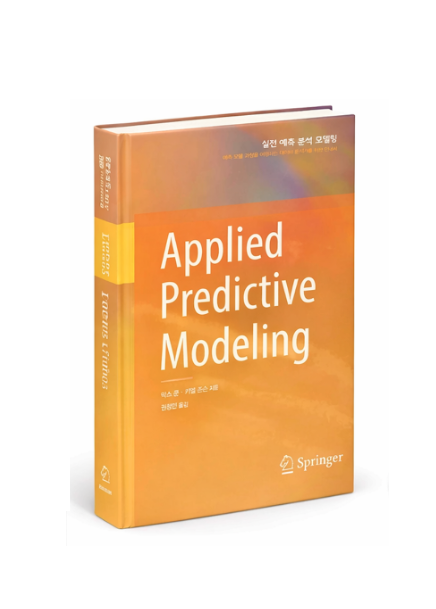
This course introduces the fundamental concepts and practical workflow of data analytics for business and distribution-focused decision making. Students learn how to transform raw business transaction data into actionable insights through data preprocessing, descriptive analytics, and professional visualization using modern analytics software. Throughout the semester, we practice analytics using multiple industry-relevant tools, including Excel, Python, and Power BI, to ensure students can apply methods in different real-world environments.
The course builds statistical foundations (sampling, estimation, and inference) and then progresses to predictive modeling methods used to support strategic and tactical decisions. Students develop the ability to choose appropriate analytical tools, construct and validate models, and interpret results for managerial action. Core modeling topics include linear and logistic regression, neural networks, tree-based methods, k-nearest neighbors, support vector machines, clustering, and model evaluation, with emphasis on assumptions, performance, and practical trade-offs. Through applied exercises and real-world problems, students practice designing end-to-end solution approaches—from defining the question and preparing data to building models and communicating insights for decision support.
This course is required for Industrial Distribution majors. While we will mostly use the Python programming language for computing, no prior experience with Python is required.
IOE 460 Decision Analysis
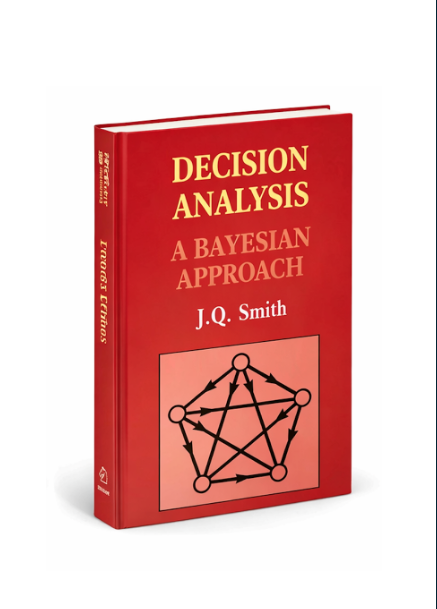
This course provides a rigorous foundation in decision analysis and behavioral/ bounded rationality models of decision making. We begin with the classical framework of rational choice—covering the axioms of decision analysis, decision bases, and how to structure decisions using decision trees. Students learn how to represent preferences through utility theory (single-attribute and multi-attribute), analyze risk attitudes, and evaluate decisions under uncertainty using probability assessment and expert elicitation. The course also develops the concept of the value of information, including calculations for perfect and imperfect information, to quantify when additional data or expert input is worth acquiring.
Building on this foundation, the course introduces Bayesian inference and key probabilistic decision modeling tools such as Bayesian networks, influence diagrams, and related graphical representations for reasoning under uncertainty. The second half of the course shifts to bounded rationality and behavioral decision modeling, examining how real decision makers depart from full rationality due to cognitive and informational limits. Students study major classes of bounded rationality—including satisficing, prospect theory, procedural decision making, limited memory, and strategic attention to what to learn or observe—and learn how to formally model these behaviors.